

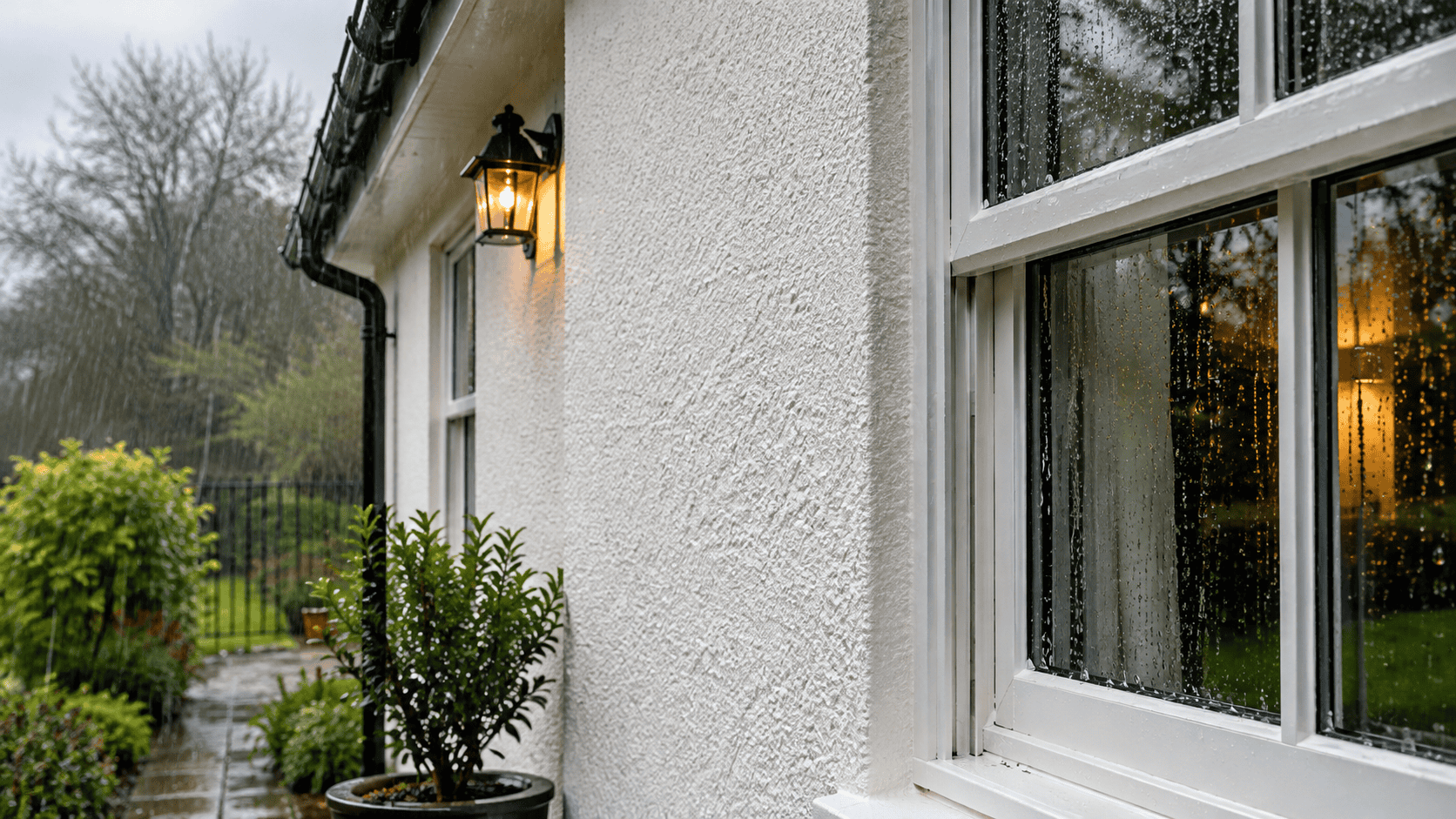
When the Rain Keeps Coming, Is Your Home’s Exterior Properly Protected?
British weather can be particularly hard on the outside of a house. Months of driving rain, fluctuating temperatures and repeated wetting and drying can take their toll on masonry, render and previously painted walls.
Perhaps your exterior walls are beginning to look tired, the paint is deteriorating, or you have noticed damp patches appearing inside after prolonged rainfall. You may be wondering whether another coat of ordinary masonry paint is enough, or whether a more substantial protective finish would be a better investment.
Traditional external wall coatings can help protect suitable exterior surfaces against rainwater penetration by reducing the amount of water absorbed into the wall. However, the effectiveness depends on the coating system, the condition of the underlying surface and how well the work is prepared and applied.
The important point for homeowners
A properly specified wall coating provides an additional protective layer against weathering. It is not a substitute for repairing defective render, leaking gutters, damaged pointing or an underlying damp problem. The wall must be assessed before a coating is applied.
How Do Traditional External Wall Coatings Protect Against Rain?
Traditional textured wall coatings are specialist exterior finishes designed to provide a more substantial surface treatment than an ordinary decorative paint film. Depending on the system, they can help shed rainwater and reduce the absorption of moisture into suitable masonry and rendered surfaces.
Think of the exterior finish as the first line of defence between your home’s walls and the weather. When that finish deteriorates, cracks, surface defects and vulnerable areas can provide routes for water to enter.
A suitable coating system can offer several benefits:
- Reduced water absorption: Helps limit the amount of rainwater entering the surface of suitable external walls.
- Weather protection: Provides a protective finish against repeated exposure to rain and normal outdoor conditions.
- Surface improvement: Textured finishes can improve the appearance of tired, uneven exterior surfaces when correctly prepared.
- Long-term maintenance: A suitable coating can reduce the need for frequent repainting compared with some conventional decorative finishes.
However, not all wall coatings have identical properties. Water resistance, texture, flexibility and water vapour permeability vary between products. These characteristics should always be checked against the manufacturer’s technical specifications.
Can External Wall Coatings Stop Damp Coming Through Your Walls?
This is one of the most important questions homeowners ask, and the answer needs a little explanation.
External wall coatings can help reduce penetrating damp caused by rain entering through a suitable wall surface, but they will not cure every type of damp.
There are several different reasons why a property might develop damp problems, and treating the wrong cause can lead to further expense.
Three different moisture problems to understand
Penetrating damp
Rainwater enters through defective external surfaces, cracks, damaged render, deteriorating pointing or poorly maintained building details. Appropriate exterior repairs and a compatible protective coating may help address the rain penetration route.
Rising damp
Moisture moves upwards from the ground through building materials. An external wall coating will not replace a damp-proof course or correct problems with ground levels and damp-proofing arrangements.
Condensation
Moisture forms when warm, humid indoor air meets colder surfaces. Poor ventilation, inadequate heating and cold areas of the building can contribute. Applying an external wall coating will not resolve the underlying indoor moisture conditions.
This distinction matters. Covering a damp wall without identifying why it is wet can make matters worse, particularly where an unsuitable or insufficiently vapour-permeable finish restricts the wall’s ability to dry.
Does a Wall Coating Allow External Walls to Breathe?
You may have heard the term breathable wall coating. It refers to a finish that allows water vapour to pass through it to a specified degree, rather than behaving as a completely impermeable barrier.
However, the word breathable should not be accepted as a guarantee that any coating is suitable for any wall.
Different coating systems have different water vapour transmission properties. Older solid-wall properties, in particular, may need a finish that is compatible with the original construction and its ability to manage moisture.
That is why the product specification matters just as much as the appearance of the finished coating. A professional assessment should establish whether the proposed system is appropriate for the existing render, masonry or previous wall finish.
Wall Coatings or Masonry Paint: Which Gives Better Rain Protection?
Both exterior masonry paint and traditional textured wall coatings can provide weather protection, but they are not interchangeable products.
Masonry paint generally provides a decorative protective finish, with performance varying between formulations. Some masonry paints are microporous and offer resistance to liquid water while allowing a degree of water vapour transmission.
Traditional textured wall coating systems are generally thicker finishes, applied using specialist techniques. Their suitability and performance depend on the particular coating and the surface underneath.
For a homeowner deciding between the two, the important considerations are:
- The existing condition of the exterior walls.
- Whether the surface is painted, rendered, pebbledashed or masonry.
- The degree of exposure to driving rain and harsh weather.
- The level of surface preparation and repair required.
- The expected maintenance and performance of the chosen system.
The cheapest initial option is not necessarily the best long-term choice. Equally, a more substantial coating is not automatically the right solution for every property.
Why Preparation Matters Before Applying an External Wall Coating
One of the biggest mistakes in exterior property maintenance is concentrating on the finish without paying enough attention to what is underneath it.
Even a good quality coating cannot compensate for a failing substrate or unresolved water ingress. Before application, the existing walls should be inspected for:
- Cracked, loose or hollow render.
- Failing paint and previous coating layers.
- Defective mortar joints or damaged masonry.
- Leaking gutters, downpipes and vulnerable window details.
- Signs of persistent moisture or salt contamination.
Any necessary repairs should be completed, and the surface should meet the coating manufacturer’s requirements for preparation and moisture condition before work begins.
It is also important to remember that exterior protection involves more than the wall itself. Roof coverings, flashings, window sills, gutters and drainage all play a part in keeping rainwater away from the building.
Are External Wall Coatings Suitable for Homes Across the South West?
Properties across Devon, Cornwall, Somerset and Dorset experience a variety of weather conditions. Exposed locations, coastal settings and properties facing prevailing winds can experience substantial amounts of wind-driven rain.
That does not mean every South West home needs the same coating system. A sheltered property with sound existing render has different requirements from an exposed coastal house with deteriorating masonry or previous paint failures.
Traditional textured wall coatings may be a suitable option for many rendered, pebbledashed and masonry surfaces, provided the particular product is approved for the substrate and the preparatory work is carried out properly.
The best starting point is an assessment of the property rather than choosing a coating simply because it has been advertised as waterproof or long-lasting.
Considering a protective wall coating for your home?
Render Refresh helps homeowners across Devon and the wider South West explore practical options for improving and protecting their exterior walls.
We believe in assessing the existing surface, understanding its condition and recommending a suitable approach rather than automatically suggesting the most extensive or expensive work.
Frequently Asked Questions About External Wall Coatings and Damp
Will external wall coatings stop rain getting into my house?
A suitable external wall coating can reduce rainwater absorption through the treated surface. However, it cannot compensate for defective roofs, leaking gutters, structural cracks or other routes through which water can enter a property.
Can you apply a wall coating to a damp wall?
Not without first establishing why the wall is damp. The underlying cause needs to be investigated, and the surface must meet the coating manufacturer’s requirements before application. Coating over an unsuitable wet surface can lead to adhesion and moisture problems.
Are textured wall coatings waterproof?
Some traditional textured coating systems are designed to resist water penetration and shed rainwater. Their performance depends on the specific product, application thickness, preparation and condition of the substrate. No coating should be assumed to make every wall completely waterproof.
Will a wall coating prevent rising damp?
No. Rising damp involves moisture moving upwards from the ground through building materials. An exterior coating does not replace appropriate damp-proofing measures or resolve defects in ground drainage and damp-proof courses.
Can external wall coatings be applied over existing masonry paint?
Sometimes, but it depends on the condition and compatibility of the existing paint, the substrate and the proposed coating system. Loose, flaking or unsuitable paint will generally require attention before a new finish is applied. Always follow the manufacturer’s preparation guidance.
Protecting Your Home Starts With Choosing the Right Finish
External walls take the full force of the British weather, and choosing how to maintain them deserves careful thought. A traditional textured wall coating can offer a useful combination of appearance improvement and additional protection against rain, but only when the system is suitable for the property and correctly installed.
If your exterior walls are looking tired, showing signs of weathering or need more than another coat of ordinary masonry paint, it may be worth considering the alternatives.
At Render Refresh, we help homeowners across Devon, Cornwall, Somerset and the wider South West explore suitable exterior wall improvement and protective coating options.
Rather than guessing which finish your property needs, start with an assessment and a straightforward discussion about the available options.
Contact Render Refresh to discuss your external wall coating requirements and request a quotation.
Leave a Reply