

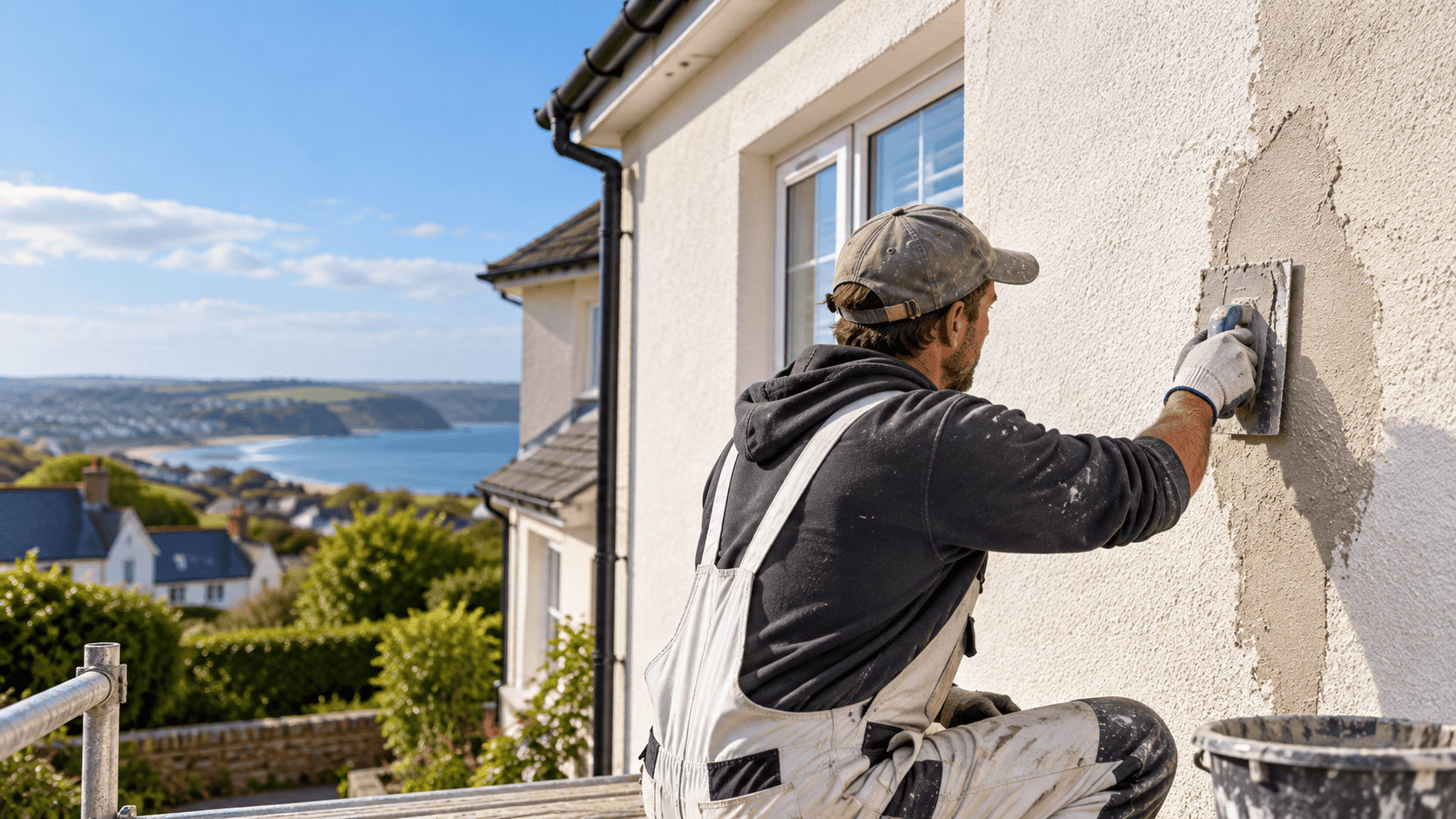
Having the outside of your home professionally coated is a significant investment.
You want your house to look better, but you also want to know that the work will stand up to British weather and help protect the walls for years to come.
If you have started collecting quotes for an exterior wall coating, you may find that contractors recommend different products, preparation methods and prices.
That does not necessarily mean one is wrong, but it does mean you need to understand exactly what you are paying for.
After decades of working in the exterior home improvement trade, I have learnt that the finished appearance is only part of the job. What happens before the coating goes on, and whether the chosen system suits the property, can be just as important.
Here are seven things worth checking before you commit to a contractor.
At a glance: what should an exterior wall coating quote include?
A good quotation should identify the proposed coating system, the preparation and repairs required, how the walls will be assessed, what is included in the price, and the precise terms of any guarantee. It should also explain any limitations or additional work that may be needed.
Do not compare prices alone. Compare the work, materials and protections each contractor is actually offering.
1. What preparation and repairs are included?
Preparation is one of the first things I would look at when assessing a quotation. A coating needs a suitable surface to adhere to, and simply applying a new finish over damaged or poorly prepared walls can lead to problems later.
Ask the contractor how they intend to prepare your particular property. Depending on the condition of the walls, this may involve cleaning, removing loose or flaking material, treating appropriate areas, repairing cracks and dealing with defective render or masonry.
Not every house needs the same treatment. A sound, previously painted wall may require a different approach from an exterior with loose render, algae growth or areas of failed masonry paint.
- Are minor repairs included in the price?
- Will larger defects be identified and priced separately?
- How will loose, unstable or contaminated surfaces be dealt with?
- Will the contractor explain any preparation that is excluded?
A useful quotation describes the proposed work rather than simply saying that the walls will be prepared. You should understand what will actually happen to your home before the coating is applied.
2. Is the coating suitable for your existing walls?
Exterior wall coatings are not all the same. Some are textured, some form a more flexible protective finish, and others are designed for particular substrates or exposure conditions. The right choice depends on the construction and condition of your property.
For example, a modern rendered house, an older solid-wall property and a home with previously painted brickwork may have very different requirements. A competent contractor should consider the existing surface, its condition and any known moisture issues before recommending a system.
Ask for the product name and technical information. You can then check what the manufacturer says about suitable substrates, preparation, application conditions and maintenance.
Why the product matters
A wall coating is a protective finish applied to a suitable exterior surface. Depending on the system, it may provide greater durability and weather resistance than conventional masonry paint. However, performance varies by product, substrate, preparation and application.
Ask your contractor to explain why the proposed system is appropriate for your home, rather than relying on general claims about coatings.
3. How will the coating protect your home against the weather?
Wind-driven rain is a particular consideration for many homes in the South West, where exposed locations and prolonged wet weather can put exterior walls under pressure.
A suitable protective coating can help reduce rainwater penetration through a sound, properly prepared wall. However, it must be appropriate for the building, and the coating alone cannot correct every source of damp.
Water can also enter through defective gutters, leaking pipes, damaged pointing, failed roof details or cracks in the building fabric. These problems need to be investigated and addressed where necessary.
Ask what weather protection the proposed product is designed to provide, whether it is suitable for your walls and how the contractor will deal with any existing defects. If moisture is already affecting the property, establish the likely cause before work begins.
4. Is it really different from ordinary masonry paint?
This is an important question because a lower-priced quotation for masonry paint may not offer the same specification as a specialist wall coating.
Masonry paint is a decorative finish designed for suitable exterior masonry and render.
Specialist coatings may have additional properties, such as a textured finish, greater film build or specific weather-resistance characteristics. The exact differences depend on the products being compared.
Neither the word “coating” nor a higher price automatically proves that a product is better. Ask the contractor to compare the actual systems, including preparation, expected maintenance, manufacturer guidance and guarantee conditions.
If you are weighing up the alternatives, read our guide to exterior wall coating and protection services to understand the type of work Render Refresh undertakes.
5. What does the guarantee actually cover?
A long guarantee can be reassuring, but you need to know exactly what it promises. A guarantee is only as useful as its written terms, exclusions and the circumstances in which it applies.
Ask whether the guarantee is provided by the manufacturer, the contractor or both.
Check its duration, whether registration is required, what defects are covered and what you must do to maintain your rights under it.
For example, a guarantee against fading, peeling or cracking does not automatically mean that every damp problem, structural movement or defect in the underlying wall is covered.
Where a contractor offers a 20-year guarantee, ask for the applicable written terms before agreeing to the work.
Confirm that the exact product and installation qualify, and check who would be responsible if a covered problem developed.
A question worth asking
“If the coating fails, what happens next?”
A clear answer should explain how a claim is made, which defects qualify, what remedy is available and whether any conditions or exclusions apply.
6. What is included in the final price?
Two quotations can look very different because they may include different amounts of work.
Before choosing, check that you are comparing like with like.
Ask whether the quoted price includes:
- Labour, materials and the specified coating system.
- Access equipment or scaffolding, where required.
- Surface preparation and the agreed repairs.
- Protection of windows, doors, paths, plants and surrounding areas.
- Application of the specified number of coats and the final clean-up.
Also ask how unforeseen defects will be handled.
If further repairs become necessary after preparation begins, you should know how additional costs will be agreed before the extra work proceeds.
The cheapest quotation is not necessarily the least expensive option over time if essential preparation or repairs have been left out.
7. Will the contractor assess the property before starting?
A reliable recommendation should be based on your actual walls, not simply the appearance of your house in a photograph.
Photographs can help with an initial discussion, but they may not reveal loose material, hidden defects or the full extent of moisture damage.
Before work starts, ask how the contractor will assess the surface, identify repairs and confirm that the proposed coating is suitable. They should also explain any limitations they discover and what needs to be resolved before application.
It is sensible to ask for the agreed specification in writing, including the product, preparation, repairs, price and guarantee arrangements.
This gives both parties a clear understanding of the work.
Frequently asked questions about exterior wall coating quotes
How much does an exterior wall coating cost?
The cost depends on the size and condition of the property, the accessibility of the walls, the amount of preparation and repair required, and the coating system selected.
The best way to compare prices is to obtain itemised quotations based on a clearly defined scope of work.
Can an exterior wall coating stop damp?
A suitable coating may help reduce rainwater penetrating through an appropriate exterior wall, but it will not solve every damp problem. Condensation, plumbing leaks, defective gutters, rising damp and other sources of moisture require different investigations and solutions. Identify the cause before choosing a treatment.
How long does an exterior wall coating last?
Its service life depends on the product, installation quality, exposure to weather, condition of the underlying wall and maintenance.
Check the manufacturer’s guidance and the written guarantee rather than assuming that every coating will last for the same period.
Can you apply a wall coating over existing masonry paint?
Sometimes, provided the existing paint and underlying surface are sound and compatible with the proposed system. Loose, flaking or unsuitable coatings may need to be removed or treated.
The contractor should establish the correct preparation method before recommending application over an existing finish.
Do exterior walls need to be completely dry before coating?
The acceptable surface condition depends on the product and application method. Many systems require specified moisture and weather conditions, and rain, unsuitable temperatures or excessive surface moisture can affect application and curing. Follow the manufacturer’s technical instructions.
Make an informed decision about protecting your home
A good exterior wall coating quotation should leave you understanding what is being applied, why it suits your property, how the walls will be prepared and what protection you can reasonably expect.
You should never feel that you have to agree to work before those questions have been answered.
At Render Refresh, we help homeowners across Devon, Cornwall, Somerset and the wider South West explore options for exterior wall coatings, render repairs and other exterior improvements.
The right approach starts with understanding the property and the work it genuinely needs.
Thinking about an exterior wall coating?
Tell us about your property and the condition of your exterior walls. You can also send photographs to help us understand what work you are considering.
We can discuss the options available and help you take the next step towards a properly specified quotation, without committing to work before you understand what is involved.
Discuss your property and request a quote
Render Refresh — practical advice on rendering, repairs and protective exterior finishes.
Leave a Reply